Short answer
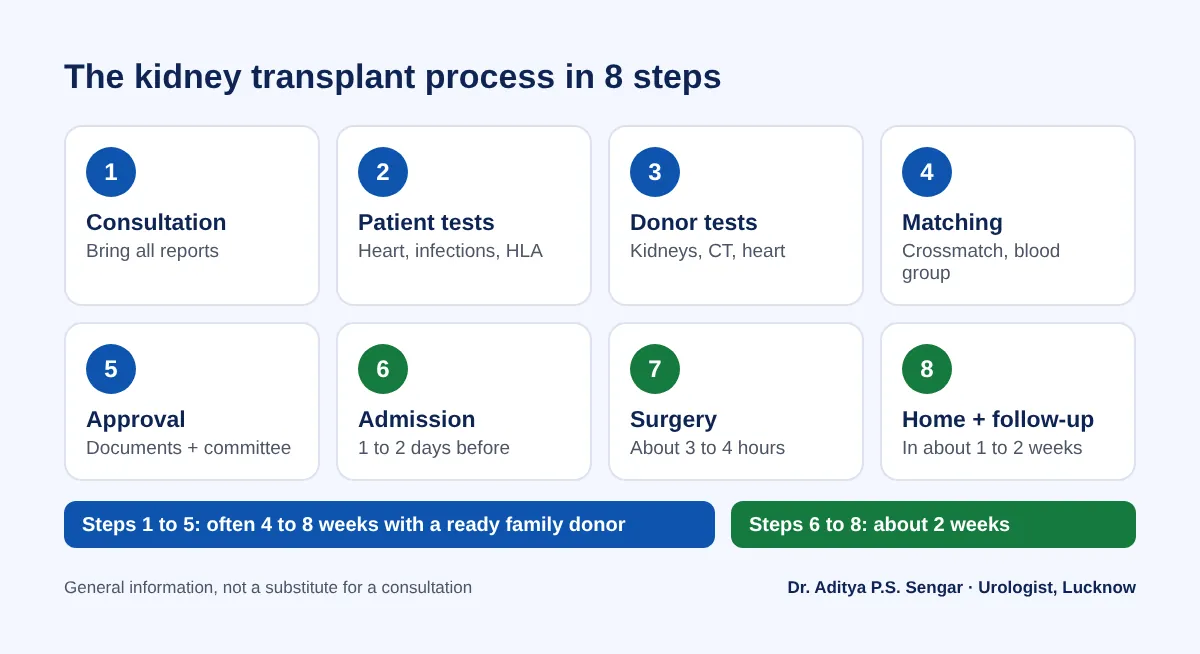
A kidney transplant in India usually follows eight steps: first consultation, tests for the patient, tests for the donor, matching, documents and Authorisation Committee approval, admission, surgery and follow-up. With a ready family donor, the work-up often takes about 4 to 8 weeks. The operation itself takes about 3 to 4 hours, and most patients go home in 1 to 2 weeks.
A kidney transplant can feel like a long road with many tests and papers. Knowing the steps in advance makes it easier for the patient and the family. This guide follows the process used for kidney transplant in Lucknow at Precision Urology Hospital, where Dr. Aditya P.S. Sengar is Head of Renal Transplantation and has been part of more than 500 transplants. The order of tests can differ slightly from patient to patient.
Step 1: First consultation
Bring all reports: creatinine and other blood tests, ultrasound, dialysis records and a list of medicines. The team checks whether a transplant is suitable and explains the options, including a living family donor or the deceased donor waiting list. Families can also send reports on WhatsApp first.
Step 2: Tests for the patient (recipient)
These check that the body can safely take a new kidney and the medicines that follow:
- Blood group, HLA typing and antibody tests
- Heart tests: ECG, echocardiogram and, in some patients, a stress test or angiography
- Chest X-ray and lung check
- Tests for infections such as HIV, hepatitis B and C and tuberculosis
- Ultrasound of the abdomen and a check of the bladder
- Dental, and for women gynaecological, check-ups to rule out hidden infection
- Vaccinations that should be given before the transplant
Step 3: Tests for the donor
The donor has a full health check, including kidney function, CT angiography of the kidneys, heart tests and a psychological assessment. Donating is allowed only if it is safe for the donor. Details are in who can donate a kidney in India.
Step 4: Matching
The patient's blood is tested against the donor's cells (crossmatch) to make sure there are no harmful antibodies. If the blood groups do not match, an ABO-incompatible transplant with extra treatment, or a swap with another family, may still be possible.
Step 5: Documents and approval
Under the Transplantation of Human Organs and Tissues Act, every living donor transplant needs approval. The family submits identity and relationship documents, and the donor and patient are interviewed by the Authorisation Committee. The hospital's transplant coordinator guides the family through this.
Step 6: Admission and preparation
The patient and donor are admitted a day or two before surgery. Dialysis may be done the day before. The anti-rejection medicines usually start just before the operation.
Step 7: The day of surgery
- Donor: the kidney is removed by keyhole (laparoscopic) surgery through small cuts in most cases.
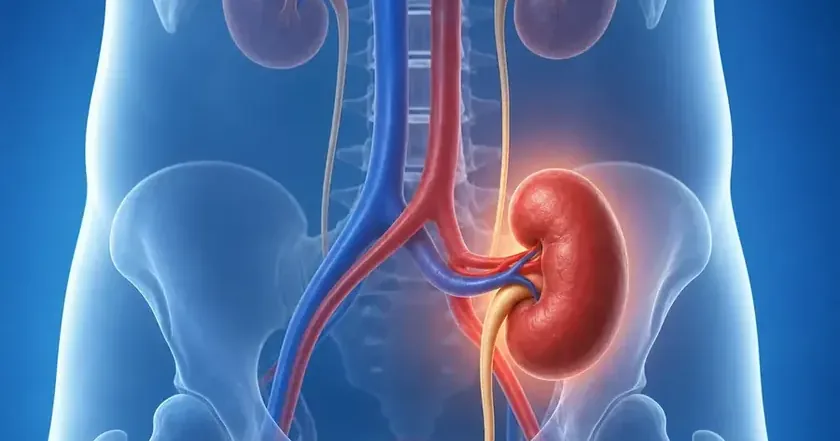
- Patient: the new kidney is placed in the lower right or left side of the abdomen and joined to the blood vessels there and to the bladder. The patient's own kidneys are usually left in place.
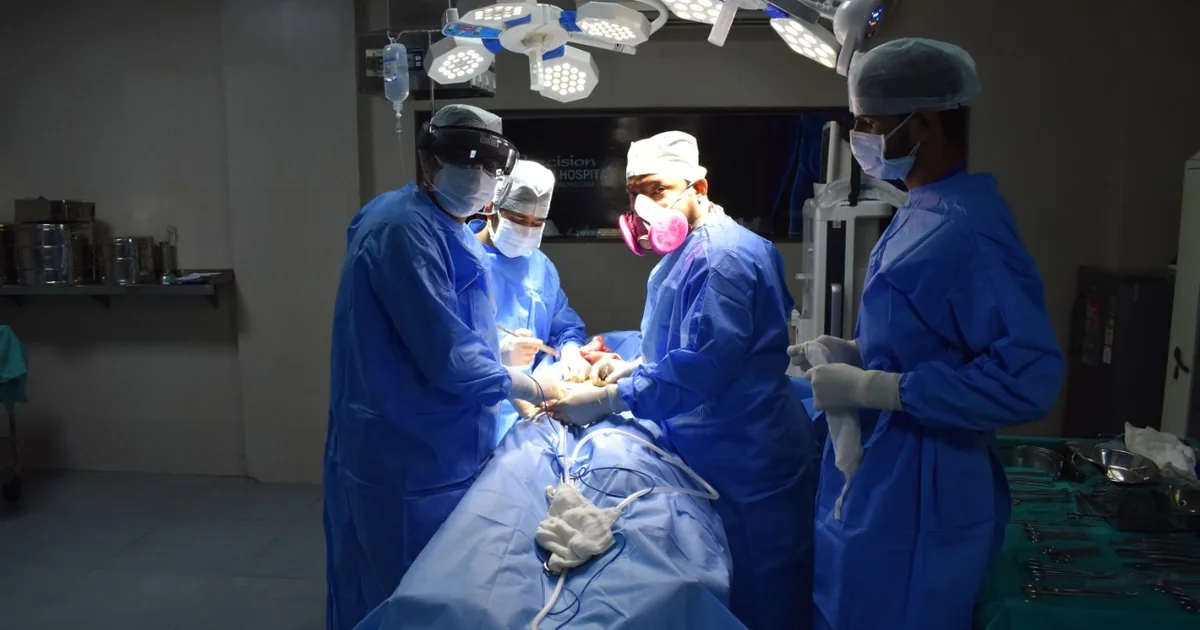
- The recipient operation takes about 3 to 4 hours. The new kidney often starts making urine on the table.
Step 8: Hospital stay and follow-up
The donor usually goes home in about 3 to 5 days, and the patient in about 1 to 2 weeks. The first 3 months need frequent blood tests and visits. Read life after a kidney transplant for what to expect at home.
How long does the whole process take?
With a family donor who is ready and fit, the tests and approvals often take about 4 to 8 weeks. It can take longer if extra tests or treatment are needed, or if a deceased donor kidney is awaited. Starting the work-up early, before dialysis or soon after, saves time. Compare kidney transplant and dialysis if you are still deciding.
Frequently asked questions
How long does a kidney transplant operation take?
The recipient operation usually takes about 3 to 4 hours. The donor operation is done at the same time in the next theatre.
Are the failed kidneys removed during a transplant?
Usually not. The new kidney is placed lower in the abdomen and the old kidneys stay in place, unless they cause problems such as repeated infection or very large cysts.
How long is the hospital stay after a kidney transplant?
Most patients stay about 1 to 2 weeks and donors about 3 to 5 days, depending on recovery.
Can a kidney transplant be done without a family donor?
Yes. The patient can be registered on the state waiting list for a kidney from a deceased donor. Waiting times vary, so a living donor, where possible, is usually quicker.
Is kidney transplant surgery painful?
There is pain from the wound for the first few days, which is controlled with medicines. Most patients walk within a day or two of surgery.
Diagnosis and treatment: Kidney transplant in Lucknow · Send your report on WhatsApp for a free opinion
What to eat: free diet planner for kidney stones, prostate, urine infections and transplant
This guide gives general information and does not replace a consultation. In an emergency, go to the nearest hospital.
Book a consultation with Dr. Aditya P.S. Sengar
OPD Mon to Sat, 12:00 PM to 6:00 PM at Precision Urology Hospital. Book on WhatsApp and the team will confirm your time.
Send your report on WhatsApp for a free opinionPrecision Urology Hospital, 652B/37 Pratap Nagar, Tedhi Pulia Ring Road, Lucknow 226022. Get directions