
Short answer
For most people with kidney failure who are fit for surgery, a kidney transplant gives a longer life and a much freer daily routine than dialysis. Dialysis keeps a person alive and is the right choice while waiting for a transplant or when surgery is not safe. A transplant done before dialysis starts, or soon after, usually gives the strongest results.
When the kidneys fail (chronic kidney disease stage 5), there are two ways to replace their work: dialysis or a kidney transplant. Both keep a person alive, but they lead to very different lives. This guide compares them so families can discuss the choice with their doctors. It is written by Dr. Aditya P.S. Sengar, Head of Renal Transplantation at Precision Urology Hospital and a kidney transplant surgeon in Lucknow who has been part of more than 500 transplants.
The two choices
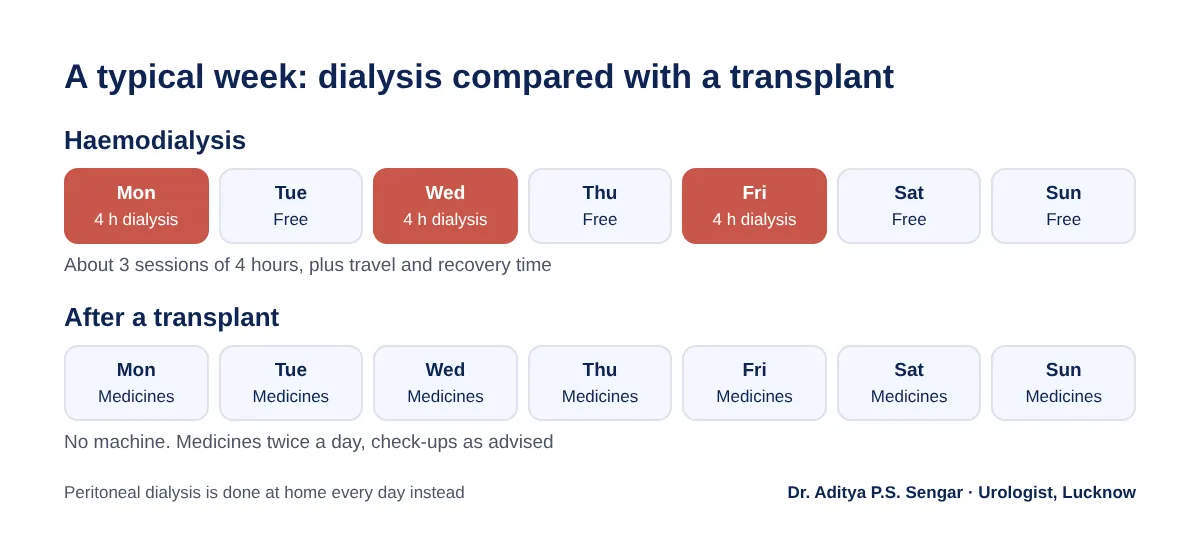
Dialysis uses a machine or a fluid to remove waste and water from the blood. Haemodialysis is usually done in a centre about three times a week, around four hours each time, through an AV fistula in the arm. Peritoneal dialysis uses fluid placed in the abdomen and is done at home every day.
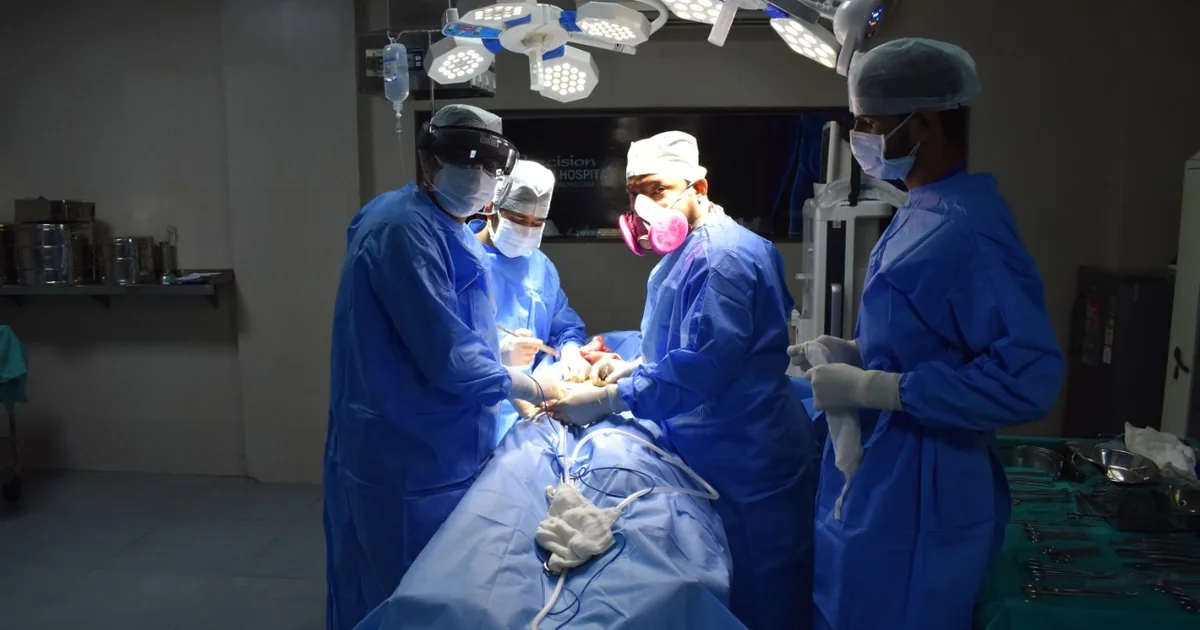
A kidney transplant places one healthy kidney from a donor into the lower abdomen. The new kidney does the work of both failed kidneys, all day, every day.
How they compare
| Kidney transplant | Dialysis | |
|---|---|---|
| Life expectancy | Longer for most suitable patients | Shorter on average, especially over many years |
| Daily life | Free of machines; only medicines and check-ups | Tied to sessions three times a week, or daily exchanges |
| Diet and fluids | Mostly normal, with low salt | Strict limits on water, salt, potassium and phosphorus |
| Energy and work | Most people return to work and travel | Tiredness is common; work and travel are harder |
| Main risks | Surgery, rejection, infection from lower immunity | Infections and blockage of the access, heart strain, low BP during sessions |
| Medicines | Anti-rejection medicines every day for life | Many medicines for BP, bones and blood count |
| Children and pregnancy | Fertility usually improves; pregnancy possible with planning | Fertility is low and pregnancy is high risk |
Who can have a kidney transplant?
Most people with kidney failure can be considered, including older patients, if their heart and general health allow surgery. A transplant may need to wait or may not be advised if there is:
- An active infection, or cancer that has not been treated
- Severe heart or lung disease that makes surgery unsafe
- Inability to take medicines regularly
- Severe obesity, until weight is reduced
Age alone does not rule out a transplant. The transplant team decides after a full check-up.
Why timing matters
The longer a person stays on dialysis, the more the heart and blood vessels are strained. A transplant done before dialysis starts, called a pre-emptive transplant, or within the first months of dialysis, usually gives the kidney and the patient the longest life. If your doctor has told you your kidneys are failing, ask about a transplant early, while there is time to test a family donor. Read who can donate a kidney in India.
When dialysis is the right choice
- While the patient and donor are being tested, or while waiting for a deceased donor kidney
- When a transplant is not safe because of other illness
- When the patient, after understanding both options, prefers dialysis
Dialysis done well, with a good fistula, regular sessions and diet control, can keep a person stable for years.
Getting a transplant opinion in Lucknow
If you or a family member is on dialysis or has been told the kidneys are failing, a transplant assessment does not commit you to surgery. It tells you whether a transplant is possible and who in the family could donate. See kidney transplant in Lucknow for how the team works, or read the kidney transplant process step by step.
Frequently asked questions
Is a kidney transplant better than dialysis?
For most patients who are fit for surgery, yes. A transplant usually gives a longer life, more energy and a freer routine. Dialysis is the safer choice for people who cannot have surgery.
Can I have a kidney transplant without going on dialysis?
Yes. A pre-emptive transplant, done before dialysis starts, is possible when a suitable living donor is ready, and it usually gives very good results.
How long can a person live on dialysis?
It varies widely with age and other illnesses. Many people live for years on dialysis, but on average survival is longer after a successful transplant.
Is there an age limit for a kidney transplant?
There is no fixed upper age. Older patients can have a transplant if their heart and general health are good enough for surgery.
Can a person go back to dialysis if a transplant fails?
Yes. If a transplanted kidney stops working, the person can return to dialysis and may be considered for another transplant.
Diagnosis and treatment: Kidney transplant in Lucknow · Send your report on WhatsApp for a free opinion
What to eat: free diet planner for kidney stones, prostate, urine infections and transplant
This guide gives general information and does not replace a consultation. In an emergency, go to the nearest hospital.
Book a consultation with Dr. Aditya P.S. Sengar
OPD Mon to Sat, 12:00 PM to 6:00 PM at Precision Urology Hospital. Book on WhatsApp and the team will confirm your time.
Send your report on WhatsApp for a free opinionPrecision Urology Hospital, 652B/37 Pratap Nagar, Tedhi Pulia Ring Road, Lucknow 226022. Get directions