
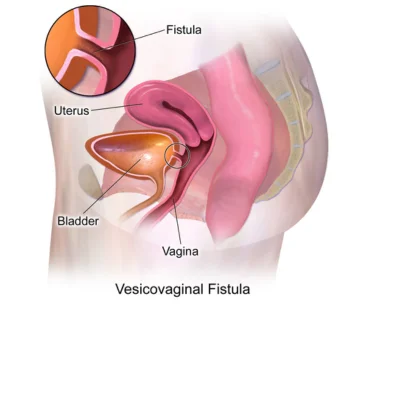
What is Vesicovaginal Fistula?
A vesicovaginal fistula (VVF) is a serious medical condition and an abnormal and often problematic connection between the bladder and the vagina. This condition results in the continuous and involuntary discharge of urine from the bladder into the vaginal vault, leading to uncontrollable leakage of urine.
This pathological connection allows urine to continuously leak from the bladder into the vaginal canal, leading to chronic and involuntary urine discharge. The condition can result from a variety of causes, including traumatic childbirth, especially in cases of prolonged or obstructed labor. Infections and inflammatory diseases of the pelvic organs, as well as direct invasion by malignancies, can also contribute to the development of VVF.Symptoms typically include constant wetness, foul-smelling vaginal discharge, recurrent urinary tract infections, and irritation or pain in the genital area.
Causes of Vesicovaginal Fistula (VVF)
Vesicovaginal fistulas can develop due to various reasons, including:
- Obstetric Trauma: The most common cause in developing countries is prolonged and obstructed labor, which can damage the tissues between the bladder and vagina.
- Surgical Complications They are often a result of surgical procedures, such as hysterectomies or other pelvic surgeries, where accidental injury to the bladder may occur.
- Infections and Inflammatory Conditions: Chronic infections or inflammatory diseases of the pelvis can also contribute to the formation of fistulas.
- Malignancies: Cancer of the pelvic organs can cause fistulas either through direct invasion or as a result of surgical treatment.
Symptoms of Vesicovaginal Fistula (VVF)
The primary symptom of a vesicovaginal fistula is the continuous, involuntary leakage of urine from the vagina. Other symptoms can include:
- Persistent wetness and irritation in the genital area.
- Foul-smelling vaginal discharge.
- Recurrent urinary tract infections.
- Vaginal pain or discomfort.
- Inflammation and excoriation of the vaginal and surrounding skin.
Diagnosis of Vesicovaginal Fistula (VVF)
Diagnosing a vesicovaginal fistula involves several steps:
- Medical History and Physical Examination: A detailed history and examination to understand symptoms and potential causes.
- Dye Tests: Using a dye (such as methylene blue) instilled into the bladder can help visualize the fistula during a physical exam.
- Cystoscopy: A procedure that involves inserting a scope into the bladder to directly visualize the fistula.
- Imaging: Imaging studies like pelvic ultrasound, CT scans, or MRI can help in visualizing the fistula and assessing its extent.
Treatment of Vesicovaginal Fistula (VVF)
Treatment of vesicovaginal fistulas typically involves surgical repair. The approach depends on the size and location of the fistula, as well as the patient’s overall health:
- Surgical Repair: The primary treatment, where the fistula is surgically closed. This can be done through various approaches, including vaginal, abdominal, or laparoscopic surgery.
- Catheterization: In some small fistulas, prolonged bladder catheterization may allow the fistula to heal on its own.
- Tissue Flap Procedures: In cases where the fistula is large or has failed previous repairs, tissue flaps may be used to cover and reinforce the repair site.
- Postoperative Care: Includes measures to ensure proper healing and prevent infection, such as the use of antibiotics and avoidance of activities that could stress the repair site.
A vesicovaginal fistula is a significant medical condition that requires prompt diagnosis and treatment to restore normal urinary function and improve the quality of life for affected individuals. If you suspect you have a VVF or experience symptoms related to urinary leakage, it is important to consult Dr. Aditya Sengar the best urologist in lucknow for vesicovaginal fistula treatment.
Continuous urine leakage and fistula repair evaluation
Vesicovaginal fistula treatment in Lucknow requires careful diagnosis because continuous leakage may be confused with incontinence. Dr. Aditya Sengar evaluates surgical history, delivery history, radiation or infection factors, cystoscopy findings, fistula size, bladder health, and timing for repair.
Key symptom
Continuous leakage of urine through the vagina after pelvic surgery, childbirth, trauma, infection, or radiation can suggest VVF.
Diagnosis focus
Evaluation may include dye testing, speculum examination, cystoscopy, urine tests, imaging, and assessment of fistula location and tissue health.
Repair planning
Treatment depends on fistula size, cause, tissue condition, infection status, previous repairs, and timing after the original injury or surgery.
Tests for vesicovaginal fistula
Tests confirm that the leakage is from a fistula and show its size and position, which helps plan the repair.
- Dye test: a coloured liquid is put into the bladder through a catheter to see if it leaks into the vagina.
- Speculum examination: a gentle internal examination to see where the leak is.
- Cystoscopy: a thin camera passed into the bladder to look at the fistula and the health of the bladder.
- Urine test and culture: checks for infection, which should be treated before repair.
- Ultrasound, CT or MRI: may be used to check the kidneys and ureters and see if there is more than one fistula.
How the surgery is done
- The doctor confirms the fistula, treats any infection and decides the best timing for repair.
- In some very small, fresh fistulas, keeping a catheter in the bladder for some weeks may allow it to close on its own.
- Most fistulas need surgery, done under anaesthesia, through the vagina, the abdomen or by laparoscopy, depending on size and position.
- The opening is closed in layers, and in larger or repeat fistulas a tissue flap may be used to strengthen the repair.
- A catheter is left in the bladder after surgery to keep it empty while the repair heals.
Recovery after vesicovaginal fistula treatment
- First 24-48 hoursYou will be in hospital with a catheter. Pain is managed with medicines, and you are encouraged to drink fluids.
- First 1-3 weeksThe catheter usually stays in for some time so the repair can heal. It is important that it keeps draining well.
- After catheter removalMost women can pass urine normally. A check is done to make sure there is no leakage.
- 2-3 monthsAvoid intercourse, heavy lifting and inserting anything into the vagina until the doctor says it is safe.
The doctor will tell you how long to keep the catheter and when to restart normal activities based on your repair.
Cost of vesicovaginal fistula treatment in Lucknow
The cost of fistula repair depends on the size and position of the fistula, the type of surgery needed, whether it is a first or repeat repair, and how many days you stay in hospital. Many women worry about cost, but the repair is often more affordable than expected.
Precision Urology Hospital accepts almost all health insurance and cashless schemes, so the repair is usually covered. You will be given a clear estimate before surgery, so there are no surprises. You can send your reports on WhatsApp for a free first opinion. Cover depends on your own policy, and the team can check it with your insurer before treatment.
Send reports for a free opinionWhy see Dr. Aditya Sengar for vesicovaginal fistula
- Tests to find the cause, not just repeat antibiotics
- Care for women and men, including incontinence and fistula repair
- Urine culture, ultrasound and uroflowmetry reviewed together
Watch: Dr. Aditya Sengar explains
Vesicovaginal fistula: frequently asked questions
How is VVF different from urinary incontinence?
VVF often causes continuous leakage through the vagina, while incontinence usually leaks with cough, urgency, or movement. A urology exam helps separate the causes.
Which tests confirm vesicovaginal fistula?
Dye tests, pelvic examination, cystoscopy, urine tests, and imaging may be used to identify the fistula site and plan repair.
Can vesicovaginal fistula be repaired?
Many VVF cases can be repaired surgically, but timing and technique depend on size, location, infection, tissue condition, and previous surgery.
When should I consult a urologist for continuous urine leakage?
Continuous leakage after delivery, hysterectomy, pelvic surgery, radiation, or injury should be assessed by a urologist.
Book a consultation for vesicovaginal fistula
OPD Mon to Sat, 12:00 PM to 6:00 PM at Precision Urology Hospital. Book on WhatsApp and the team will confirm your time.
Send your report on WhatsApp for a free opinionPrecision Urology Hospital, 652B/37, Pratap Nagar, Tedhi Pulia, Lucknow 226022. Get directions
Related treatments
- Bladder, urine & incontinenceUrinary incontinenceStop urine leakage with exercises, medicines or surgery.Read more
- Bladder, urine & incontinenceStress urinary incontinenceLeakage on coughing, sneezing or lifting, treated in women.Read more
- Injury & reconstructionUrological traumaEmergency care for kidney, bladder and urethra injuries.Read more

All urology treatments · Urologist in Lucknow · Best urologist in Lucknow
- Urology FAQsShort answers to common questions
- Patient storiesWhat patients wrote on Google
- Coming from Gomti Nagar?Directions and timings
- About Dr. Aditya SengarTraining, experience, memberships