
Short answer
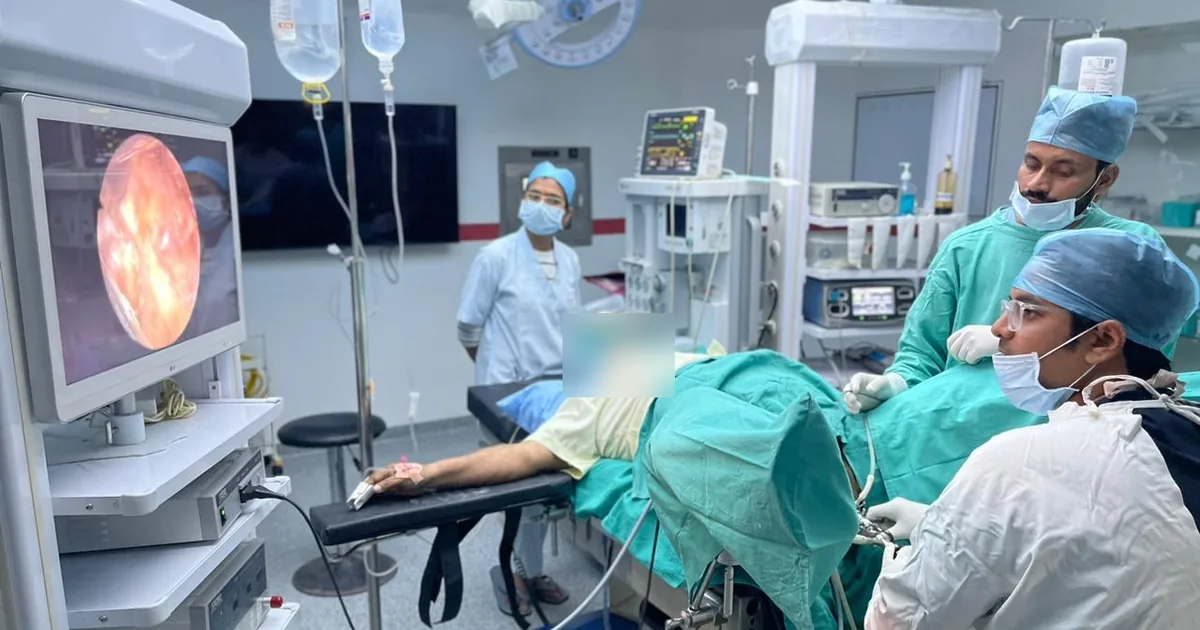
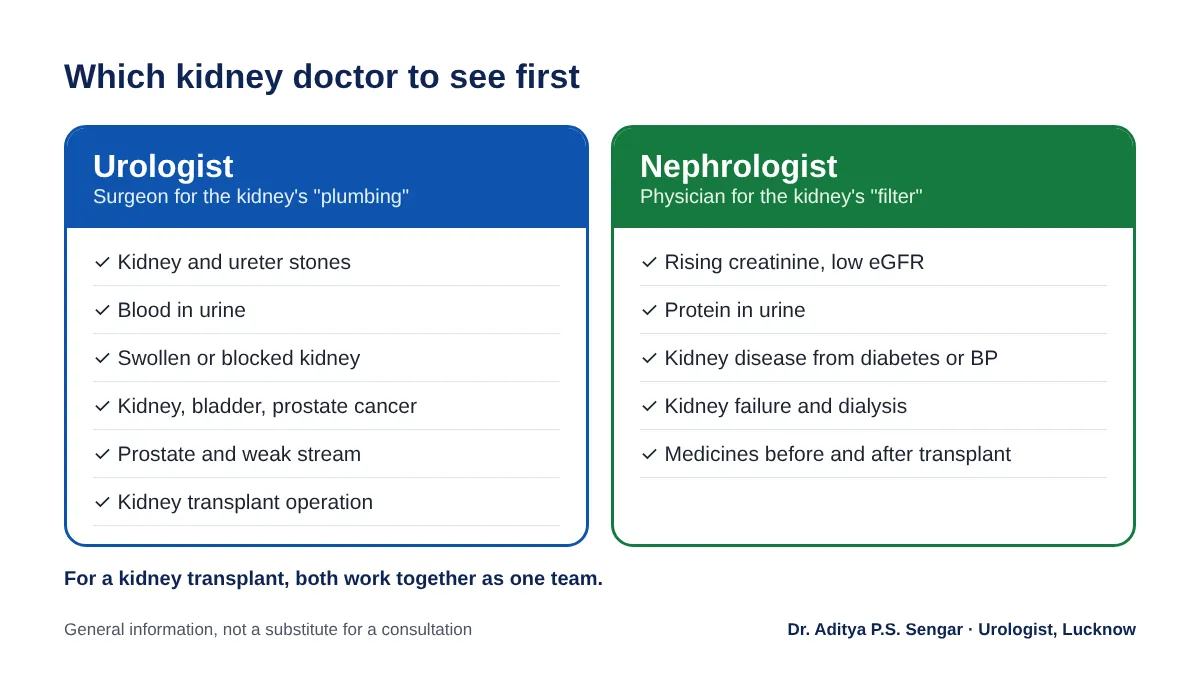
A urologist is a surgeon who treats structural kidney problems such as stones, blockage, tumours and injuries, and performs kidney transplant surgery. A nephrologist is a physician who treats how the kidneys work, such as rising creatinine, protein in urine, kidney failure and dialysis. For a kidney transplant, both work together as one team.
When people search for a "kidney doctor" or "kidney specialist", they may mean either of two specialists: a urologist or a nephrologist. Seeing the right one first saves time and tests. This guide explains the difference. It is written by Dr. Aditya P.S. Sengar, a urologist and kidney transplant surgeon in Lucknow who works alongside nephrologists every day.
The short difference
| Urologist | Nephrologist | |
|---|---|---|
| Type of doctor | Surgeon | Physician (medicine specialist) |
| Main focus | The "plumbing": stones, blockage, tumours, injuries, prostate, bladder | The "filter": how well the kidneys clean the blood |
| Typical problems | Kidney stones, blood in urine, swollen kidney, kidney or bladder cancer, prostate | Rising creatinine, protein in urine, kidney failure, kidney-related high BP |
| Treatment | Endoscopic, laser, keyhole and open surgery, plus medicines | Medicines, diet, dialysis |
| Kidney transplant | Performs the transplant operation and the donor surgery | Prepares the patient, manages dialysis and anti-rejection medicines |
See a urologist if you have
- Kidney or ureter stones, or stone pain
- Blood in the urine
- Swelling of the kidney (hydronephrosis) or a blockage seen on a scan
- A cyst or growth in the kidney, or a raised PSA
- Prostate enlargement, a weak stream or urine retention
- Repeated urine infections
- Kidney failure and a plan for a kidney transplant operation
See a nephrologist if you have
- A rising creatinine or a low eGFR on your blood test, without a blockage
- Protein or blood in the urine from kidney inflammation (glomerulonephritis)
- Kidney disease from diabetes or high blood pressure
- Kidney failure that needs dialysis
When both are needed
Many patients see both. A stone that blocks the kidney can raise creatinine. A urologist removes the blockage, and a nephrologist follows kidney function afterwards. In a kidney transplant, the nephrologist prepares the patient and manages medicines for life, while the urologist and transplant surgeon perform the donor and recipient operations. If you are not sure where to start, a urologist in Lucknow can see you first and arrange a nephrology opinion if it is needed.
Frequently asked questions
Is a urologist a kidney doctor?
Yes. A urologist is a surgical kidney doctor who treats stones, blockages, tumours and injuries of the kidney and urinary tract, and performs kidney transplant surgery.
Who should I see for high creatinine?
Start with a nephrologist if there is no blockage. If an ultrasound shows a stone, a swollen kidney or an enlarged prostate blocking urine, see a urologist, because removing the blockage may bring creatinine down.
Who treats kidney stones, a urologist or a nephrologist?
A urologist treats kidney stones, including removing them. A nephrologist may help find the cause in people who form stones again and again.
Who does a kidney transplant?
A kidney transplant is done by a team. A transplant surgeon, often a urologist, performs the operations, and a nephrologist manages the medical care before and after.
Diagnosis and treatment: Kidney transplant in Lucknow · Send your report on WhatsApp for a free opinion
This guide gives general information and does not replace a consultation. In an emergency, go to the nearest hospital.
Book a consultation with Dr. Aditya P.S. Sengar
OPD Mon to Sat, 12:00 PM to 6:00 PM at Precision Urology Hospital. Book on WhatsApp and the team will confirm your time.
Send your report on WhatsApp for a free opinionPrecision Urology Hospital, 652B/37 Pratap Nagar, Tedhi Pulia Ring Road, Lucknow 226022. Get directions